
Ticks hold onto vegetation waiting for a host to pass by - a behavior known as questing.
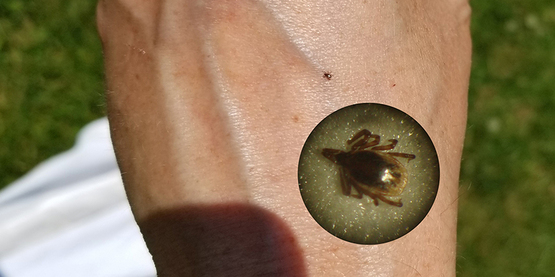
Blacklegged tick nymphs are the size of a poppy seed.
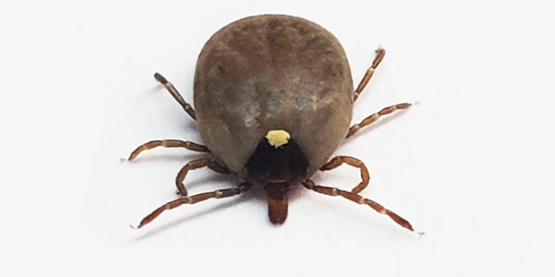
Ticks, like this lone star tick, engorged with blood are more difficult to identify.
Tick Talk
Please note: Cornell Cooperative Extension does NOT test ticks.
You can send your tick away to be tested at one of the labs listed on the University of Rhode Island website.
Ticks and tick-borne diseases have become a significant public health issue in New York, with numerous tick species and diseases currently present and spreading within the state and region. More ticks in more places also increase your risk of tick encounters and the disease-causing pathogens they inject during their blood meal.
To learn more about tick ID and testing services, visit the Northeast Regional Center for Excellence in Vector-borne Diseases.
Different species of ticks can transmit different pathogens, so identifying the tick species is important. The NYS Health Department provides information on ticks and the diseases they may carry.
Cornell Cooperative Extension follows the CDC recommendation of not having the tick tested for diagnostic purposes. The reasons include:
- Positive results showing that the tick contains a disease-causing organism do not necessarily mean that you have been infected.
- Negative results can lead to false assurance. You may have been unknowingly bitten by a different tick that was infected.
- If you have been infected, you will probably develop symptoms before results of the tick test are available. If you do become ill, you should not wait for tick testing results before beginning appropriate treatment.
Consult a health professional regarding tick testing.You can keep the tick by placing it in a container with gel sanitizer.Date and label your container.
Tick testing does contribute to community-science. The Thangamani Lab in the SUNY Upstate Medical University is investigating the geographic expansion of ticks and tick-borne diseases in New York.
Keep yourself safe from tick bites while outdoors by following this guidance from Cornell Integrated Pest Management. Prevention is best. Avoiding tick-borne diseases and impacts means avoiding a tick bite. See more resources in the left and right sidebars of this webpage.
Content compiled by members of the Cornell University Horticulture Program Work Team, 2021.
Last updated April 29, 2026
Avoiding Tick Bites

Don’t Get Ticked NY is a NYS IPM Program campaign to reduce human exposure to ticks and tick-borne diseases and promoting IPM, especially monitoring, personal protection, and best management practices.
Managing Ticks
Ticks of New York

Tick-borne Diseases
The Tick App

The Tick App is a free app for your smartphone. The app contains information on ticks and asks you to log your daily activities to help researchers. You can even send pictures of your ticks for identification.
The app allows people living in high-risk areas for Lyme disease to participate in a regional tick exposure and human behavior study.